


My Routine in Singapore

Made it to Singapore! (Let’s ignore the fact that I’m writing this on June 19, 2026, after I’ve already finished the semester and returned home. I really need to be better about blogging during the semester, but either way, it’s been so cool to reflect on my time abroad and all the things I did and learned.)
Ever since I got back to the U.S., people have been asking me what my favorite thing about my semester in Singapore was. I always reply, "I just loved my routine while I was there! I miss it so much." So here’s a look at my routine and all the little things that made living in Singapore so amazing and unforgettable.
Grocery Shopping: I lived in a really cute part of Singapore called Holland Village, and there was a grocery store called FairPrice literally a one-minute walk from the entrance of my apartment complex. I got into the routine of going every 2–3 days to restock a few grocery items, and I genuinely loved it. It was small, convenient, and became such a normal part of my week. Across the street, about another minute away, was another grocery store called CS Fresh (Cold Storage Fresh), where I would go to get fresh sourdough bread and pomegranates. It was a little pricier, so I mainly went there for specialty items.
Gym: I got an amazing gym membership at a gym called Fitness First, which had 14 locations all around Singapore. One of them was just a 15-minute walk from my apartment, right between my apartment and my university. When I was originally searching online for gyms in the area, this was the only one that offered a four-month contract, and I’m so glad they did because it turned out to be such a great experience. They gave me a huge promotion for the first two months and half off the third month because I referred a friend, so it worked out perfectly.
The gyms had traditional weight rooms, saunas, steam rooms, cold plunges, swimming pools, recovery and massage stations, workout classes, and they even provided workout attire! Throughout the semester, I realized that I really enjoy working out after my classes and whatever else I had planned that day. I got into such a good routine and learned so much. The staff was incredibly welcoming and kind, and several of the personal trainers helped correct my form. I learned the importance of warming up before workouts and stretching afterward, especially using foam rollers. I also realized that I carry a lot of stress in my upper back.
Classes: I absolutely loved my classes this semester. I took Entrepreneurial Marketing, Digital Marketing That Works, Asian Culture and Society, Strategic Management, Asian Company Challenge, Political Economy Through the Lens of Film, and Mandarin.
I really liked my class schedule because I mostly had afternoon classes, aside from a few 8:30 a.m. classes during the first month of the semester. These courses really helped me narrow down what I'm interested in. With a degree in International Business and Management, I’m finding myself especially interested in marketing, geopolitics, and international affairs. Enjoying these courses gave me a lot more clarity about possible future career paths.
The classes were much longer than I was used to, about 2 hours and 45 minutes, with a 15-minute break in the middle. Most days, I just had one class from 1:00–3:45 p.m., which was honestly the perfect schedule. Attendance was mandatory, and you could only miss one class before it started affecting your grade.
Since ESSEC is a private university, the class sizes were much smaller, which meant more discussion, more engagement, and closer relationships with professors. I personally loved the way classes were structured. We didn’t have busywork homework. Instead, everything was hands-on and based around projects, papers, presentations, and one final exam. I really grew in my presentation skills because I was constantly speaking in front of classmates. By the end of the semester, I felt so much more confident.
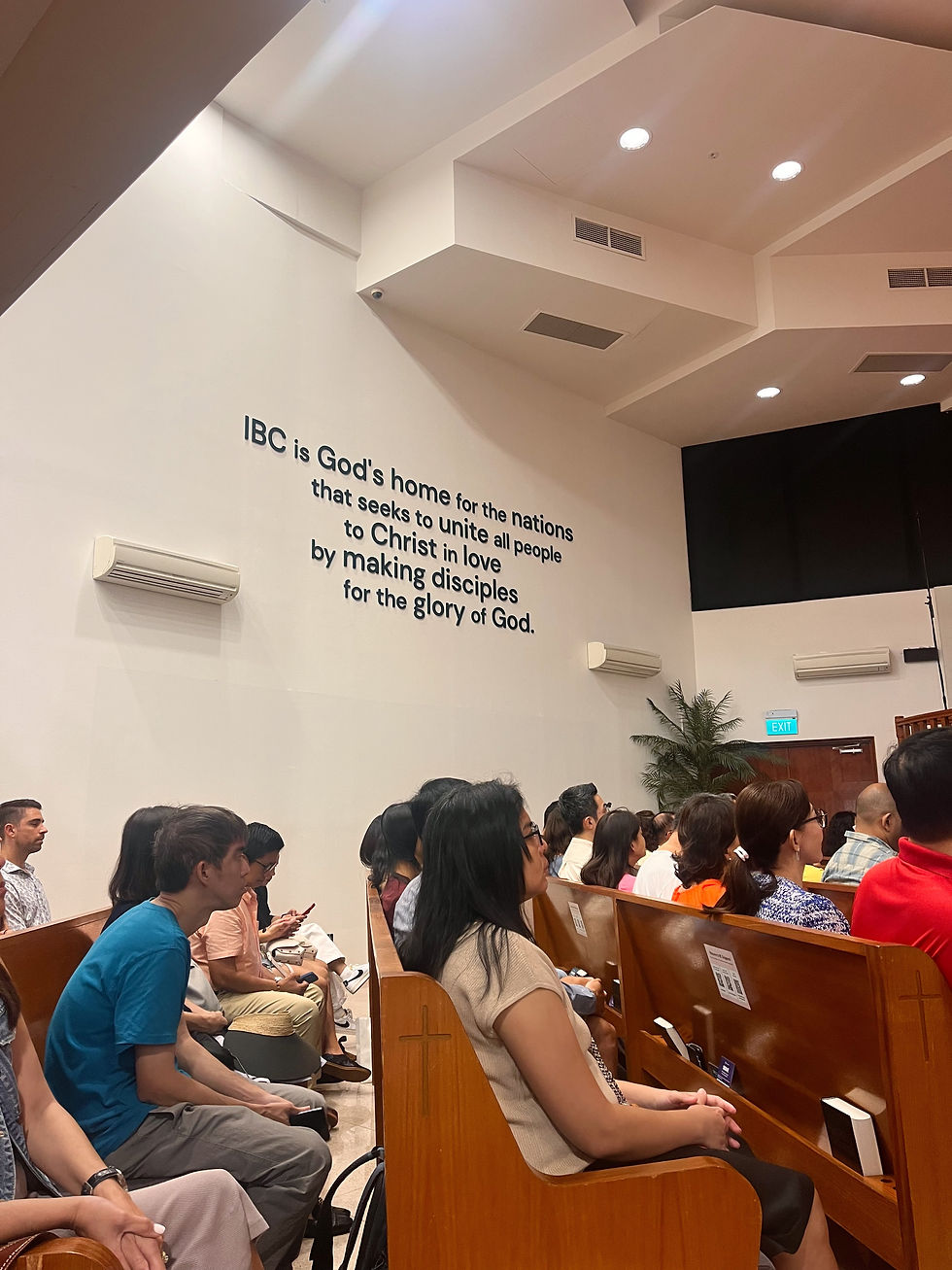
IBC: Every Sunday and Thursday night while I was in Singapore, I went to IBC for either a church service or Bible study. I made friends with local Singaporeans, which was so much fun since my school was mostly made up of French students and other exchange students. It was honestly a little difficult to meet locals otherwise, so I really appreciated getting to know people through church. It became such a meaningful part of my weekly routine.
Public Transportation: One of my favorite parts of my routine was taking the MRT (Singapore's train system). I conveniently lived right next to a station. Since my apartment was only about a 30-minute walk from school and 15 minutes from the gym, I didn't ride it every day, but I used it all the time to explore Singapore after class and on the weekends. I loved how safe, clean, and efficient the public transportation was. I even memorized the sounds and announcements they played on repeat in the different languages because I heard them so often. I honestly miss it.
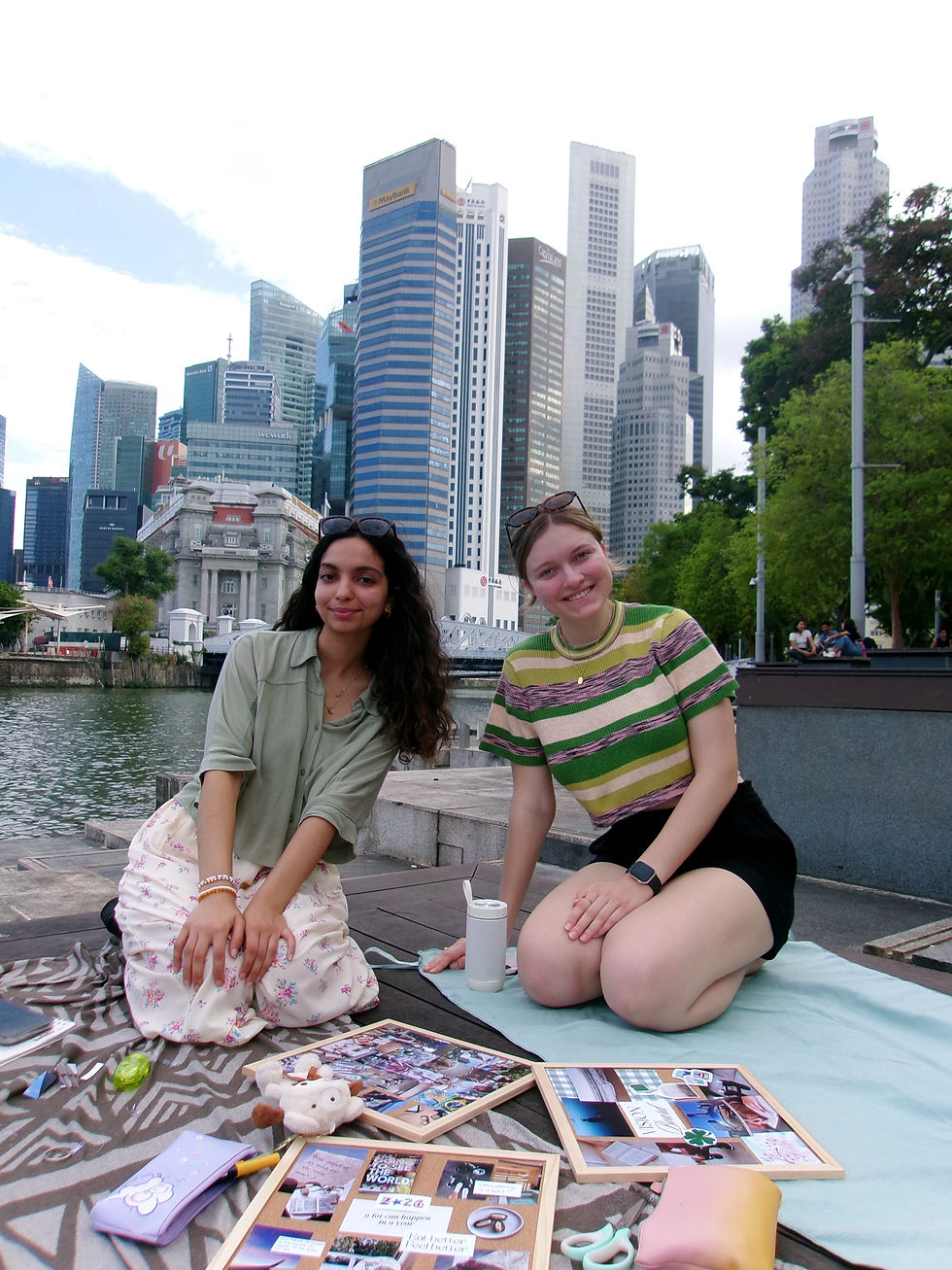
Weekends in Singapore: Surprisingly, I spent the majority of my weekends in Singapore. I traveled occasionally to Australia, Malaysia, Indonesia, and Japan, but outside of those trips, I loved staying in the city. My weekends usually consisted of journaling, sightseeing around Singapore, swimming at our apartment pool, going to the gym, going to church, and hanging out with my roommates.
As much as I sometimes got antsy to leave the country and travel somewhere new, I’m really grateful that I spent so many weekends simply enjoying life in Singapore. Looking back, slowing down and appreciating the everyday moments ended up being one of my favorite parts of the entire semester.



A conversation about understanding media messages more carefully seems most useful to me when it leaves space for uncertainty and further questions. Separating a claim from the evidence offered for it makes a message easier to examine. I would use that point as a starting question when considering media literacy skills. I do not have a settled view yet, but this seems like a good place to slow down and look more closely. What questions should readers ask before sharing a striking headline?
I find organising email for study and work easier to think about when there is a concrete question to start from. A clear system for messages can make deadlines easier to find without constant checking. For me, that is a useful way into the broader subject of email organisation tips. I would be interested in a simple example, because it is often the ordinary details that make an idea memorable. How do you distinguish messages that need action from those worth keeping for reference?
What interests me about exploring stories through creative reading is how a broad idea becomes part of an ordinary day. A character's journey can become a starting point for imagining a different place or perspective. I would use that point as a starting question when considering creative reading activities. The part I would like to explore further is what happens when the idea meets a real situation with its own limitations. How would you encourage readers to connect a story with their own questions?
A conversation about learning photography through constructive feedback seems most useful to me when it leaves space for uncertainty and further questions. A comment about light or framing is more useful when it explains what the viewer noticed. It also gives the phrase photography feedback tips a clearer meaning than a label on its own. I do not have a settled view yet, but this seems like a good place to slow down and look more closely. How can a photography discussion remain encouraging while offering specific criticism?
A conversation about creating supportive relationships in education seems most useful to me when it leaves space for uncertainty and further questions. Being listened to can make it easier for a student to explain a difficulty before it grows. This is why I would approach student emotional support with a specific question rather than a fixed expectation. I am still thinking through the details, and a small example would help me picture how this works in practice. What helps a support conversation feel welcoming rather than intimidating?